Bedding · Practical guide
How to Choose a Mattress Topper for Comfort and Support
A mattress topper is a relatively simple way to change how a bed feels. It may add cushioning to a firm surface, soften pressure beneath the shoulders and hips, or introduce a different material and texture to the sleep environment. But it is an adjustment, not a cure-all: a topper cannot restore the support of a mattress that has sagged or worn out.
There is a familiar moment in the life of a mattress when it seems almost right. The bed is not old enough to discard, perhaps, and its support remains broadly dependable; yet the surface feels too firm, too warm, or simply unlike the place one hopes to settle at the end of the day. A mattress topper enters this small domestic drama as a possible compromise: a new layer, rather than a new bed.
That modest ambition is also its virtue. A topper can change the feel of a sleep surface without requiring a complete replacement. It can add softness or cushioning, and some materials offer a more responsive or breathable sensation than the mattress beneath them. The important question is not which topper is universally best. It is what, precisely, you want to change—and whether a topper is capable of changing it.
For UK shoppers comparing mattress toppers, the useful details are often less glamorous than the product names suggest: the condition of the existing mattress, the topper’s material and thickness, its ability to stay in place, and the instructions for cleaning it. Considering these in order can prevent a plush-looking layer from becoming an expensive way to postpone the wrong decision.
Begin with the mattress you already own
Before browsing materials, spend a little time assessing the bed itself. Does the mattress still provide reasonably even support? Are there visible dips, a pronounced hollow where someone sleeps, damaged seams, or a tendency to roll towards the centre? If so, an additional layer may disguise the surface for a while, but it will not rebuild the structure underneath.
A topper is most useful when the mattress remains serviceable but its surface comfort is not quite right. A bed that feels uniformly too firm may benefit from a cushioning layer. A mattress that is still supportive but has a slightly harsh or unyielding upper feel may become more comfortable with a material that gently conforms to the body. In contrast, a topper laid over a deep sag can follow that sag, leaving the sleeper with the same uneven foundation plus a new layer of fabric and filling.
It is worth distinguishing surface softness from support. Softness describes the first impression of the bed; support concerns how the body is held over time. A softer surface may ease pressure for one sleeper, while another may prefer a firmer, more stable feel. Neither preference is a reliable diagnosis of spinal alignment, and a topper’s advertised firmness should not be treated as a medical guarantee. If discomfort is persistent, severe, or associated with a health condition, seek appropriate professional advice rather than expecting bedding to resolve it.
Also consider whether the problem is truly the mattress. A pillow that is too high or too flat, a room that is too warm, or bedding that traps heat can all affect the night’s comfort. A topper changes the surface beneath the sleeper, but it will not correct every source of disturbed sleep.
Choose a material by how it feels and behaves
Topper materials are not merely labels on a specification sheet. They influence how quickly the surface responds when you move, how closely it conforms, how much air seems to circulate, and what sort of care the layer requires. The best starting point is your own preference: do you want a softly yielding surface, a buoyant one, or something with a more natural, textured character?
Latex: springy, responsive cushioning
Latex is often chosen for its resilient feel. Rather than slowly settling around the body, it tends to push back more promptly when weight shifts. That responsiveness can make turning over feel easier for people who dislike a deeply enveloping surface. Latex toppers are available in different constructions and firmnesses, so the material name alone does not tell the whole story; the actual feel depends on the formulation, thickness, and cover as well.
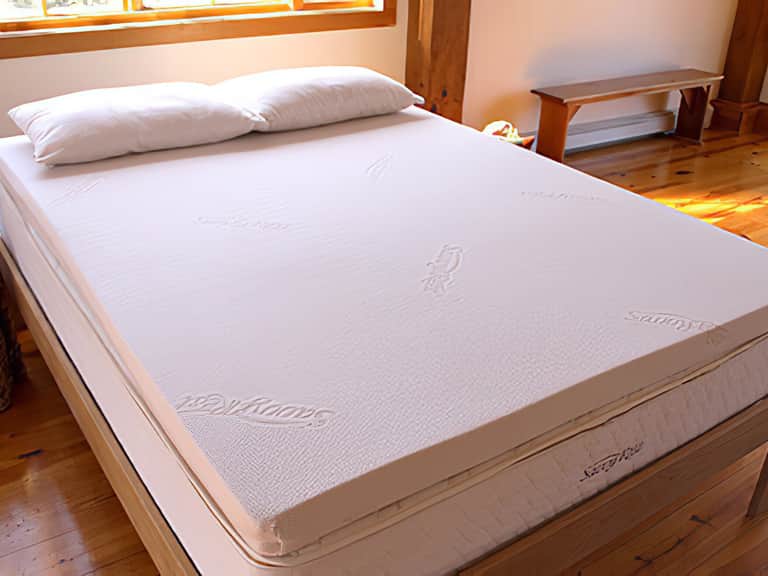
As one example of this category, the Savvy Rest Vitality Latex Mattress Topper is described as a three-inch layer of soft natural Talalay latex in an organic cotton stretch-knit cover. The listed construction is intended to add cushioning and pressure relief, particularly where an existing mattress feels too firm. Those details can help a reader understand the design, but they do not guarantee that the topper will suit every body or bed. Check its dimensions, care information, and return terms before deciding.
Wool: a cushioned, temperature-conscious layer
Wool has a long history in bedding, partly because it can offer a soft, textured buffer while helping manage moisture and warmth. Its feel is distinct from latex: less springy, more like a padded layer that settles into the bed’s character. The construction and quantity of wool matter, and so do the conditions in which the bed is used. A natural fibre is not automatically cool in every room or for every sleeper; warmth depends on the whole sleep system, including mattress, sheets, duvet, clothing, and temperature.
The Vispring Heaven Luxury Supreme Mattress Topper is described as combining British fleece wool, soft-needled British wool, and South American horsetail, with a stated height of 3.9 inches. Its materials give it a different profile from a thin, simple pad: it is a substantial layer designed to add plushness. A deep topper of this kind may make a noticeable change to the bed’s height and feel, so consider the mattress’s existing comfort, fitted-sheet depth, and how much cushioning you actually want before choosing.
Other fills and constructions
Depending on availability, shoppers may also encounter foam, fibre, feather, or blended-fill toppers. These vary widely. Some are designed to contour closely, while others feel more like a quilted comfort layer. Fibre-filled versions may be lighter and easier to handle; denser materials may feel more substantial. Construction affects durability and maintenance as much as the raw material does. Read the specific product description rather than assuming all toppers within a broad category behave alike.
Terms such as “natural,” “organic,” and “breathable” describe particular attributes, not an all-purpose measure of comfort. If a material claim matters to you, look for precise information about the composition, cover, certification, and care instructions. A transparent specification is more useful than a string of adjectives.
Thickness changes more than softness
Thickness is one of the most visible specifications, but it is not a simple scale in which more always means better. A thinner topper may refine the surface without dramatically changing the mattress beneath. A thicker one can create a more pronounced shift in cushioning and may make the bed feel substantially different. The outcome still depends on material density and construction: two toppers of the same height can feel quite unlike one another.
Think first about the size of the adjustment you want. If the mattress is only slightly too firm, a very thick, plush layer might overshoot the mark. If you are seeking a more enveloping surface, a slim pad may make too little difference. A topper should complement the bed, not force it into a new character that you did not want.
Thickness also affects practical details. A deeper layer raises the total height of the sleep surface and can make fitted sheets harder to secure. It may alter how a mattress protector fits, how easily the bed is made, and the step required to get in and out. If you share a bed, consider whether the added layer changes the sensation at the edge or creates a noticeable difference between the two sides. On an adjustable bed, check compatibility with the frame and mattress movement rather than assuming a topper will flex as required.
Think about temperature and breathability
“Sleeping hot” is a common reason to reconsider bedding, but heat is rarely the responsibility of one layer alone. A dense mattress, synthetic sheets, a heavy duvet, a warm room, and individual differences in temperature regulation can all contribute. A topper may influence the feel of the surface and the way heat and moisture are managed, but it cannot promise a cooler night in isolation.
When comparing materials, look for a clear description of the fill, cover fabric, and construction. A more open or responsive structure may feel different from a dense layer that closely hugs the body. Natural fibres such as wool are often valued for their moisture-management qualities, while latex is often selected by people who prefer a buoyant, less slowly conforming surface. These are useful tendencies, not universal laws. Personal experience varies, and the rest of the bedding matters.
If you are trying to reduce warmth, make changes deliberately. Consider the topper alongside the sheets and duvet, and avoid assuming that a product described as breathable will solve a room-temperature problem. A lighter duvet or a different sheet fabric may be a more direct adjustment. Changing one element at a time also makes it easier to tell what is helping.
Get the size and fit right
A mattress topper should match the mattress dimensions as closely as possible. Measure the bed rather than relying on an old label, particularly if the mattress is an unusual size or has a deep profile. In the UK, familiar size names can conceal differences between manufacturers and imported products. Check the stated measurements in centimetres or inches, and compare them with the actual mattress.
Pay attention to how the topper is secured. Some are held in place by the weight of the bedding and sleeper; others use elastic straps, a fitted skirt, or another fastening system. A layer that creeps or bunches may be distracting, especially for someone who changes position frequently. The cover and surface texture can also affect how the topper sits beneath a sheet.
Measure the combined height of the mattress and topper when checking fitted sheets. A sheet that fits the mattress alone may not stretch comfortably over both layers. If the topper is deep, ensure that the fitted sheet has enough depth and elastic to hold everything securely without pulling tight at the corners. A neat fit is not merely cosmetic: a sheet that slips free can make the bed less comfortable and more difficult to maintain.
Care, hygiene, and durability
Before choosing, establish what can actually be washed. Some toppers have removable covers; others require spot cleaning or airing and cannot be machine washed. A bulky filled layer may need more careful handling than a thin pad. The care label is the authority here. Do not assume that a natural material is safe to soak, tumble dry, or treat with household cleaners.
A separate mattress protector can help shield the mattress and, depending on its design, the topper from spills, perspiration, and everyday soil. It is sensible to confirm that the protector fits over the full combined depth without compressing the topper or coming loose. Regular airing and prompt attention to spills can help keep the sleep surface fresh, but follow the manufacturer’s instructions for the materials involved.
Durability depends on more than a headline warranty. Materials compress and wear differently; use, body weight, bed base, and care all play a role. A topper that feels luxurious on its first night may change with repeated use, while a well-made, resilient material may retain its character longer. Look for specific information on construction, expected care, warranty limits, and returns. A warranty is not a promise that a topper will feel perfect, and its terms may exclude ordinary changes in comfort or appearance.
A measured way to compare mattress toppers in the UK
Product pages can be crowded with claims, but a short comparison list keeps the decision grounded. Write down what you hope to change, then compare only options that meet the basic requirements. That makes it easier to distinguish meaningful differences from decorative language.
- Current mattress: Is it still even and supportive, or does it have a lasting dip or structural wear?
- Desired feel: Do you want extra cushioning, a more responsive surface, or a change in texture?
- Material: What is the topper made from, including its cover and any blended fibres?
- Thickness: How large a change do you want, and will the added depth work with your sheets?
- Temperature: What does the construction suggest about airflow and moisture management, and what other bedding may be contributing to warmth?
- Fit: Does the stated size match the mattress, and how is the topper kept in place?
- Care: Can it be washed, spot cleaned, aired, or only professionally treated?
- Trial and returns: What are the precise conditions, time limits, and any costs involved?
Read reviews cautiously. They can reveal recurring observations about fit, handling, or feel, but comfort is personal and a reviewer’s mattress may differ from yours. A useful review describes the context: the original mattress, the sleeper’s preferences, and how long the topper was used. A bare declaration that something is “the best” is less informative than a careful account of what changed.
Give the change a fair trial
After fitting a topper, allow yourself time to notice the difference without expecting an overnight transformation. Check that it lies flat, that the sheet is not pulling it out of position, and that the bed is being used on an appropriate base. Some materials feel different as they settle into regular use, but follow the maker’s guidance rather than assuming every topper needs a break-in period.
Pay attention to the specific problem you meant to solve. Is the surface more comfortable? Does the topper stay in place? Has the height become inconvenient? Is the bed noticeably warmer? A brief note over several nights can be more revealing than relying on the first impression alone. If the result is not right, consult the seller’s trial and return policy promptly; policies vary, and a used bedding item may be subject to particular conditions.
The right topper makes a modest promise
A good mattress topper does not need to transform a bedroom into a sanctuary or claim to solve every ache. Its useful purpose is more specific: to alter the surface feel of a mattress that remains in sound condition. Choose according to the change you want, not the loftiest description on the label. Compare materials by their actual construction, judge thickness in relation to the bed, and make room for practical questions about fit and care.
That approach may lead to a plush wool layer, a springier latex surface, or the conclusion that the mattress itself has reached the end of its useful life. Each is a better outcome than asking a topper to do a job it cannot do. In bedding, as in much else, comfort begins with knowing what is wrong—and being precise about what might make it better.